
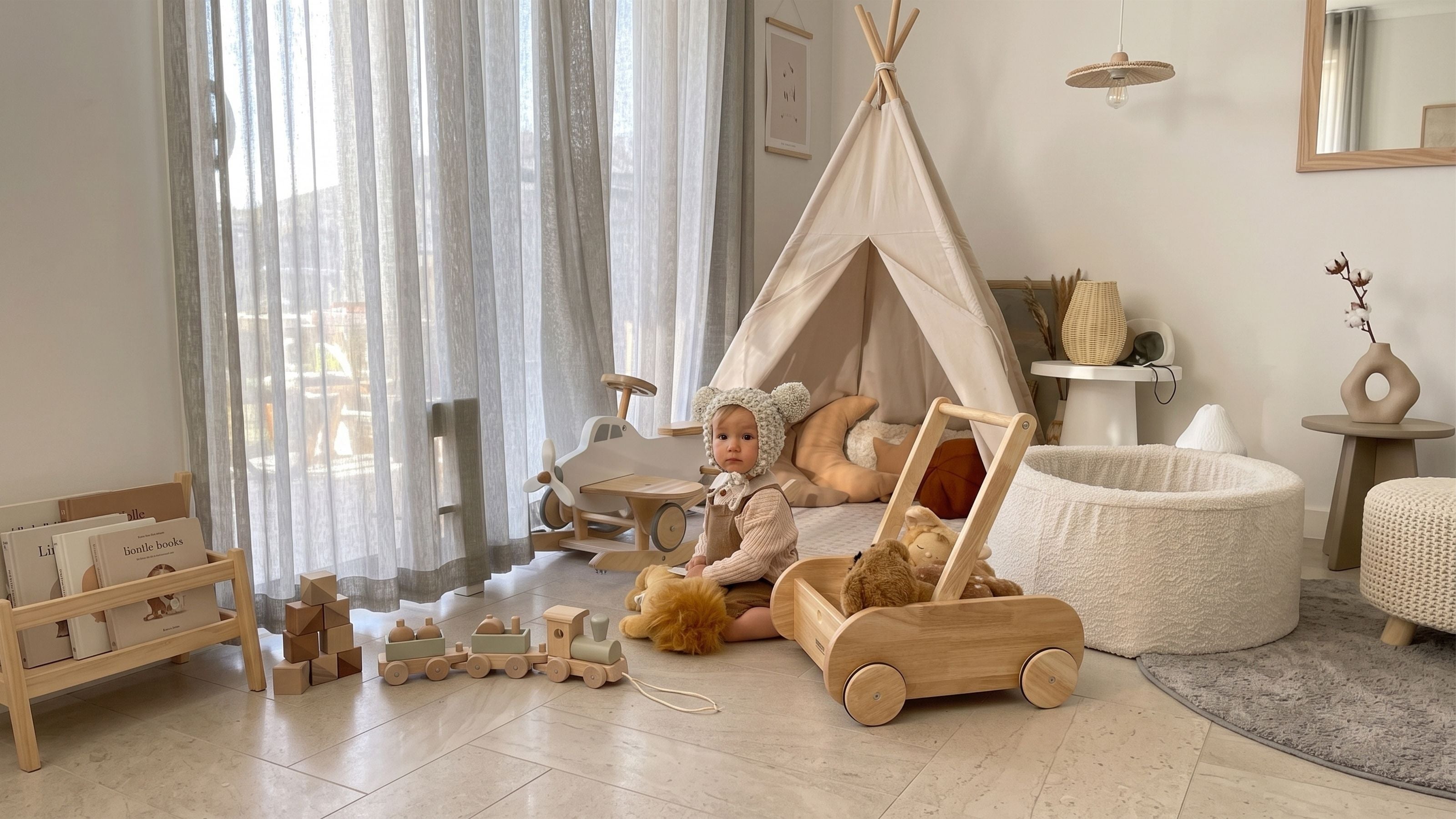
The Wooden Doll Pram: A Push Walker for Older Toddlers
A wooden doll pram sits somewhere between a first walker and a toy, and the difference matters when you are choosing one. It is a push-along walker, but it is built for an older toddler who is already on their feet and ready to take their dolls and teddies on an outing. This guide covers how a doll pram differs from a first push walker, the age it suits, and what to look for so it rolls steadily rather than running away downhill.
In This Article:
- A Doll Pram Is Not a First Walker
- Who a Doll Pram Suits and When
- What to Look For in a Wooden Doll Pram
- Getting the Most From a Doll Pram
- Frequently Asked Questions
A Doll Pram Is Not a First Walker
It is easy to lump every push-along on wheels together, but a doll pram and a first walker do different jobs. A first push walker helps a baby who is finding their feet, giving a new walker something steady to hold and push as they take early steps. A doll pram is for the stage after that, when a child is already walking confidently and wants to push their dolls around as play.
That difference shows up in the design. A first walker like the RHEA Wooden Baby Walker has an adjustable handle and wheels tuned to roll steadily under a wobbly new walker. A doll pram is lighter and simpler, built around pretend play rather than balance support, so it suits a child who no longer needs help to walk. The handle on a doll pram sits at a fixed height, because a walking toddler does not need it to move with them the way a baby learning to stand does.

Knowing which stage your child is at saves buying the wrong one. If they are just pulling up and cruising, a first walker fits; if they are walking and into pretend play, a doll pram is the one. Buying the doll pram for a baby who cannot yet walk usually means it sits unused for months, and handing a busy three-year-old a balance walker they have outgrown misses the pretend play they are ready for.
Who a Doll Pram Suits and When
A doll pram comes into its own from around two years, once a child is steady on their feet and starting to play out little stories. Pushing a doll to bed, taking teddy for a walk and parking the pram by the table are the kind of games it invites, and that pretend play is doing real work: it builds language, sequence and the beginnings of caring for someone else.
The ISLA Doll Pram Walker is made for this stage. It is sized for an older toddler to push comfortably, built from birch plywood with a fixed easy-grip handle, and finished with rounded, hand-polished edges for a child using it up close. It is made for pushing dolls and soft toys, not for a child to sit in or ride, which keeps it light and simple to steer.

That kind of open-ended play is worth encouraging. A child pushing a doll pram narrates as they go, gives the doll a name and a day, and works out little problems along the way, all of it the sort of imaginative play that stretches language far more than a toy that does one fixed thing. The pram is really a prop for a game the child makes up, which is why it holds attention long after a single-trick toy is set aside.
Because it is aimed at a walking child rather than a new one, it fits naturally alongside the other pretend-play toys an older toddler is growing into, rather than the balance aids of the first-steps stage.
What to Look For in a Wooden Doll Pram
A few things separate a doll pram that rolls nicely from one that frustrates:
- Steady wheels with a soft rubber trim, which grip the floor a little so the pram rolls at a walking pace rather than shooting away, and protect wooden and tiled floors as they go.
- A comfortable, easy-grip handle at a height an older toddler can push without stooping.
- Solid, well-finished timber with rounded, sanded edges, since a child uses it up close and often unsupervised.
- A light, simple frame a child can steer and turn themselves, so the play stays theirs.
The wheels are the part most worth checking. Bare hard wheels on a smooth floor can roll faster than a toddler expects, so a soft rubber trim that holds the pram to a walking pace makes the difference between a toy a child controls and one that gets away from them. It is a small feature that quietly decides how the pram behaves in a real room.
Birch plywood, as the ISLA pram uses, is a good sign here: it is light enough for a toddler to steer yet holds its shape under daily pushing, and a water-based finish keeps the surface pleasant for a child who will have their hands all over it. The rounded edges are not a detail to skip on a toy a child leans into and bumps against as they learn to corner it.
One honest note on any push-along: on a hard, level floor the wheels roll easily, so it is worth showing a child how to push at a walking pace and keeping play to flat, stable ground rather than slopes. A quick word about where and how to push settles most of it, and the soft-trimmed wheels help by holding a steadier pace than bare wooden ones would.
Getting the Most From a Doll Pram
A doll pram is at its best as an open-ended toy, so a favourite doll or teddy, a small blanket and a bit of space to walk are all it needs to get going. Leaving it out where a child plays, rather than packed away, means they pick up the game on their own whenever the mood strikes.
It travels well between rooms and out to the garden path on a fine day, and it pairs naturally with the other props of pretend play a toddler is collecting. A doll to tuck in, a blanket to arrange and a route to walk are enough to turn a wet afternoon indoors into a long stretch of quiet, absorbed play, and none of it needs an adult once the game is going.
As part of a wider set of active, imaginative toys, it earns its keep for a good stretch of the toddler years, bridging the gap between the first walker a child has outgrown and the more elaborate role-play that comes later. If your child is younger and still finding their feet, the first walker guide covers the earlier stage, and our note on pulling to stand helps you judge when they are ready to move.

Frequently Asked Questions
What is the difference between a doll pram and a baby walker?
A first baby walker helps a new walker find their balance, with an adjustable handle and wheels tuned to roll steadily under a wobbly child. A doll pram is for the stage after that, a lighter push-along for an older toddler who is already walking and wants to push their dolls around in pretend play.
What age is a wooden doll pram for?
A doll pram suits a child from around two years, once they are steady on their feet and starting to play out little stories. It is aimed at a walking child rather than a baby taking first steps, so it fits alongside other pretend-play toys.
Is a doll pram safe on all floors?
On a hard, level floor the wheels roll easily, so show your child how to push at a walking pace and keep play to flat, stable ground rather than slopes. Soft rubber-trimmed wheels help by gripping the floor a little and protecting wooden and tiled surfaces.
Can a child ride or sit on a doll pram?
No. A doll pram is made for pushing dolls and soft toys, not for a child to sit in or ride. That keeps it light and simple to steer, which is what makes it work as a pretend-play toy for an older toddler.
Looking for a push-along for an older toddler? See the walker range and choose between a first walker and a doll pram.





Leave a comment
This site is protected by hCaptcha and the hCaptcha Privacy Policy and Terms of Service apply.