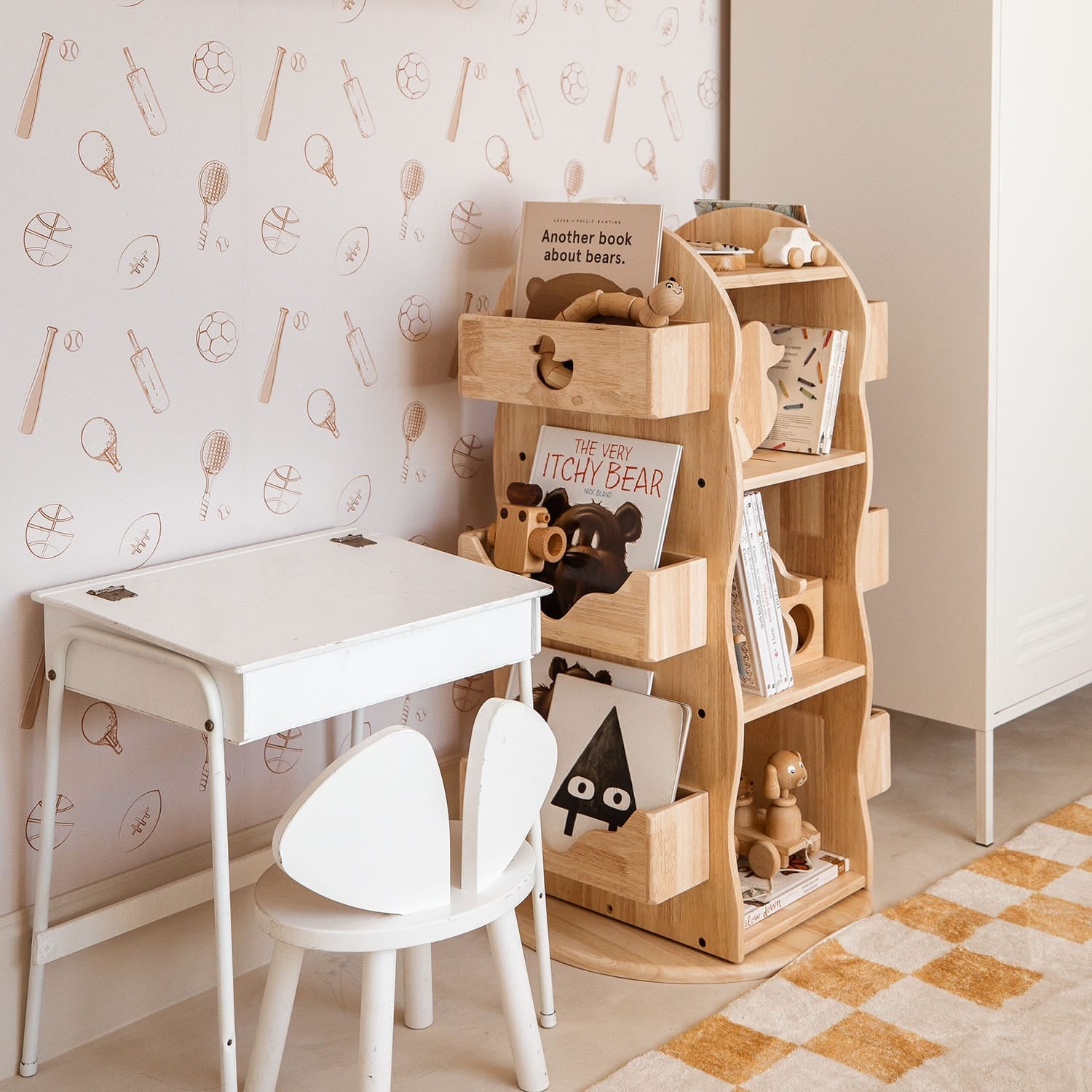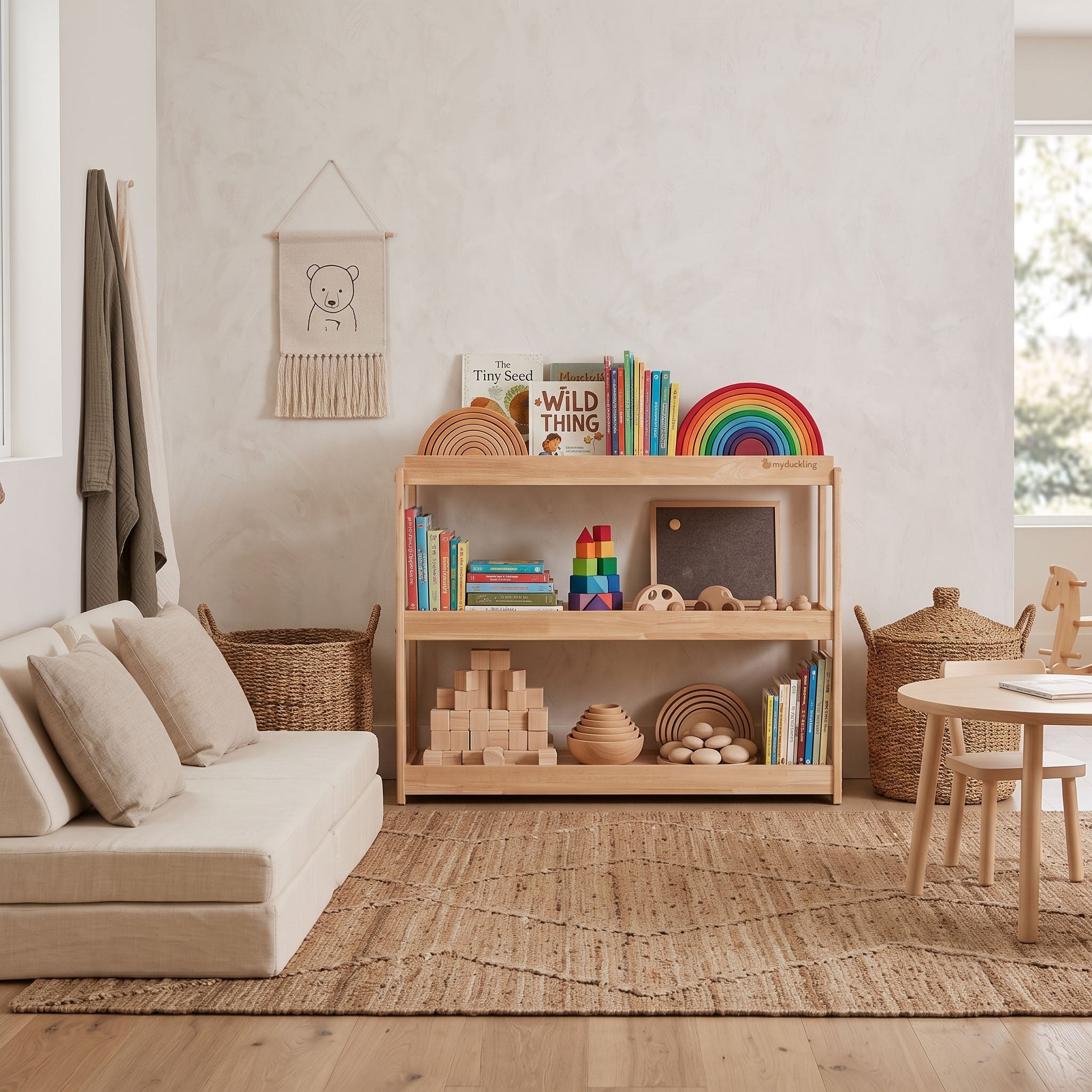
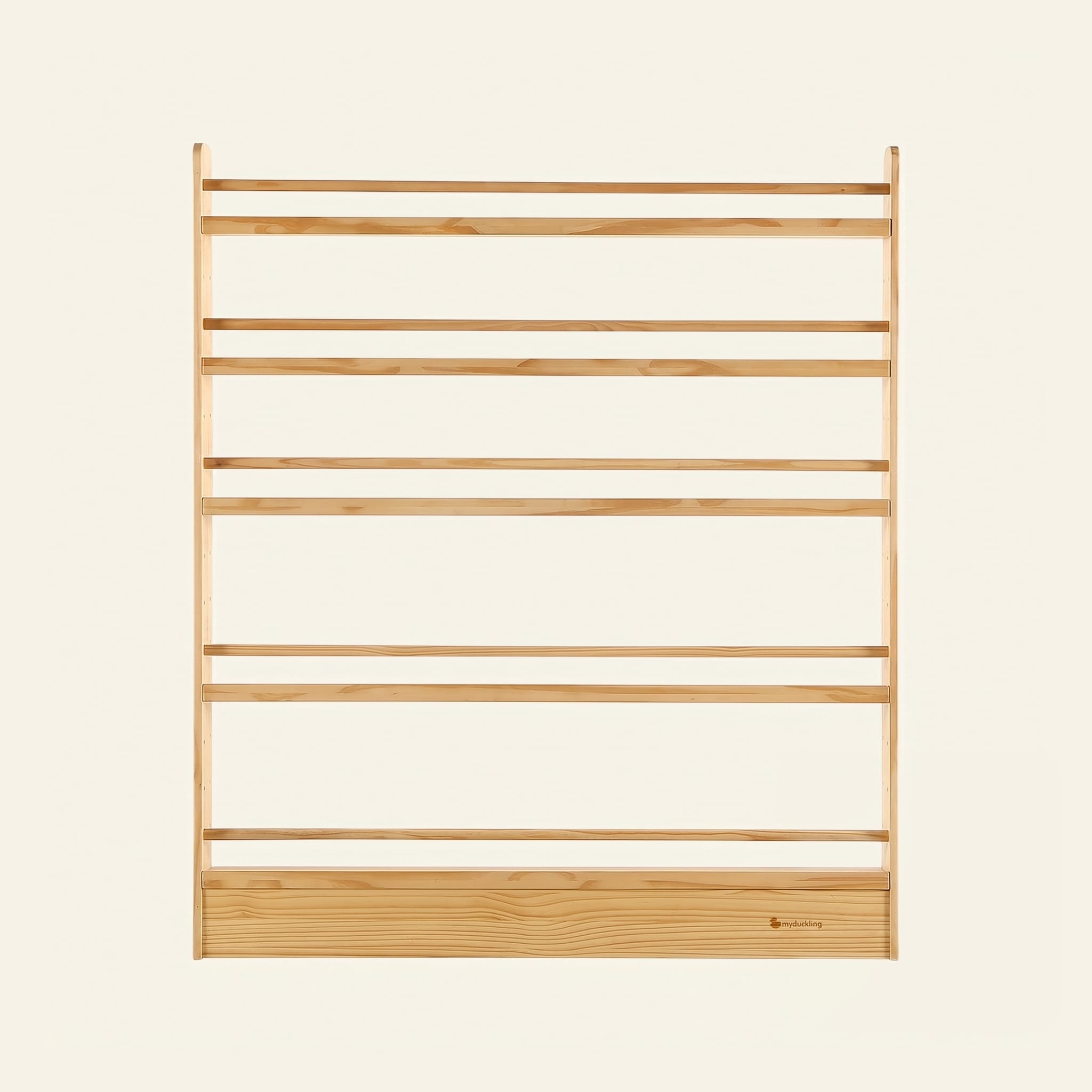
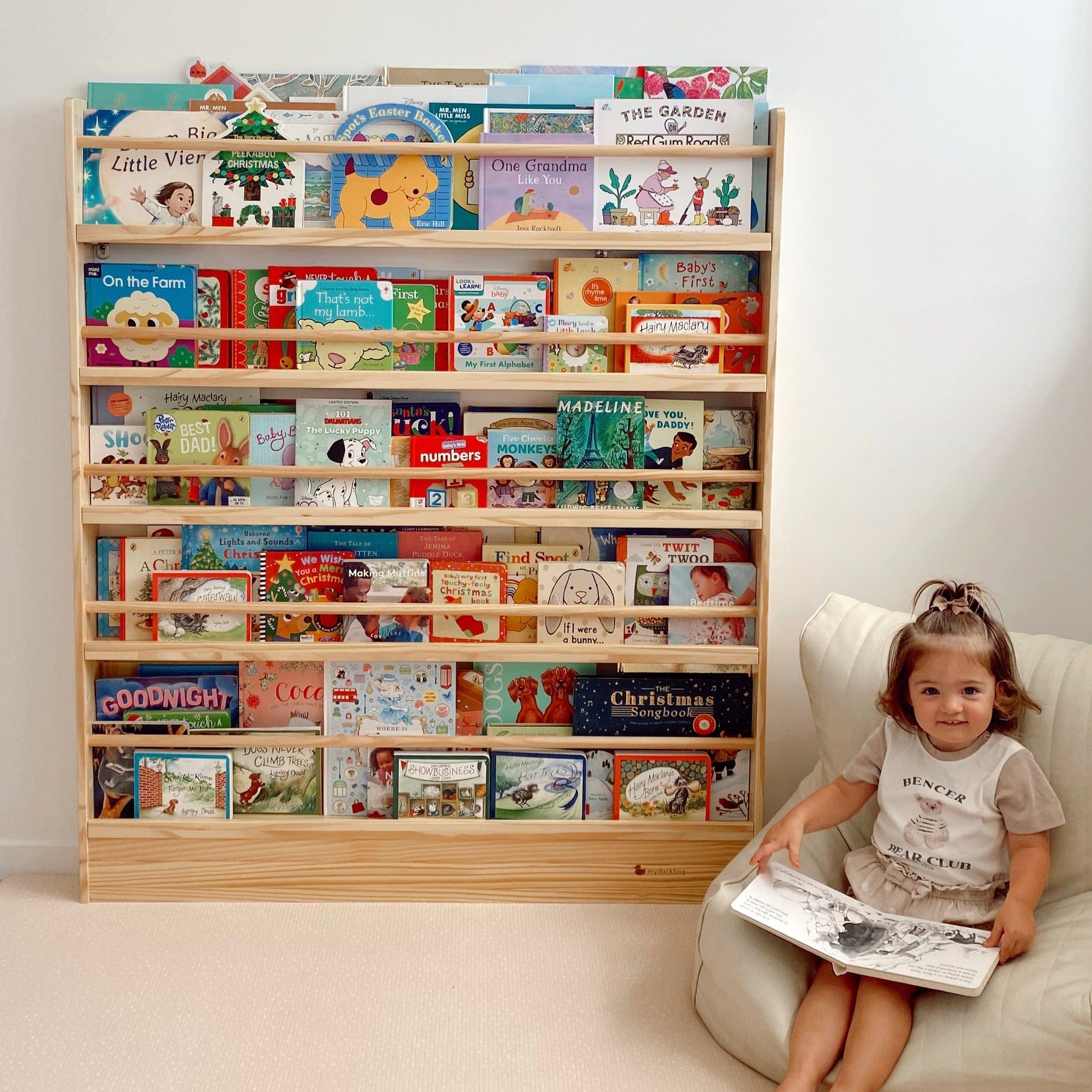
It's a bookshelf built for a child to use themselves. Instead of packing books in spine-out where the covers hide, it shows a small handful face-out at their height. That way kids can actually see what's there, pick a story and put it back without help. The whole point is to make reading feel easy and inviting from the start.
What is the difference between a front-facing and a revolving bookcase?
Both keep books in reach, just in different ways. A front-facing shelf displays covers outward on tiered ledges, which suits younger kids drawn in by the pictures. A revolving bookcase spins, so it holds a bigger library in a small footprint and an older child can browse without a long shelf. Which one fits comes down to your space and how many books you want on show.
What age is a kids' bookcase for?
Pretty much from the time a baby can sit and reach, right through the primary years. For the youngest, a front-facing display at floor level works best. Older kids often prefer a revolving bookcase that holds more of their growing collection. Because the shelves stay in reach the whole time, the same piece keeps pulling its weight as reading habits change.
How does a front-facing bookshelf help my child?
When covers face out at their height, choosing a book becomes part of the fun instead of a job for a grown-up. Kids learn to pick a story, enjoy it and put it back themselves, which builds their independence and their love of reading. Keeping only a few books on show helps too, swapping the overwhelm of a crammed shelf for a calm, tempting little selection.
Are kids' bookcases stable and safe?
A good one sits low and wide, so it stays put as kids lean in and tug books out. Because everything's in reach, they rarely need to climb, which takes away the usual cause of tipping. For extra reassurance, stand it on level flooring and anchor taller pieces to the wall where you can. Steady placement plus the usual supervision keeps book time safe.
Are Montessori bookshelves worth it?
A well-made shelf tends to stay in the room for years, so it pays to pick one built to last. It does more than hold books, too. Because it invites kids to choose, read and tidy themselves, it builds daily habits and a bit of calm. Sturdy shelves that shrug off constant use and still look good usually beat flimsier ones you end up replacing.
What a kids bookcase looks like at a child's height
A kids bookcase keeps a small library where your child can reach it and, just as important, see it. Instead of spines lined up out of view, favourite titles face outward so a young child can recognise a cover and choose for themselves.
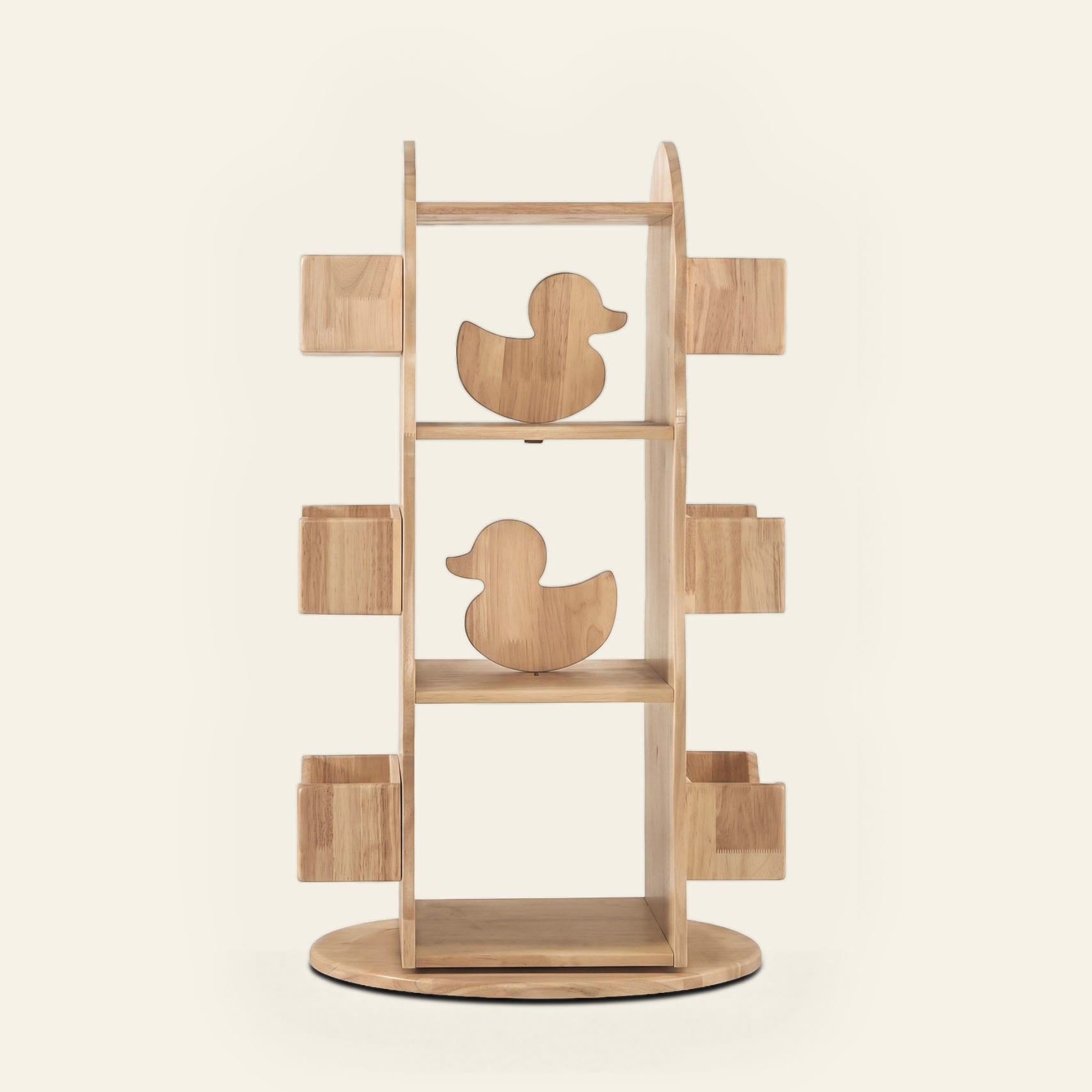
Our range covers two styles: front-facing shelves that display covers at a child's height, and revolving units that spin to bring every side round to the child.
How a front-facing bookcase builds a reading habit
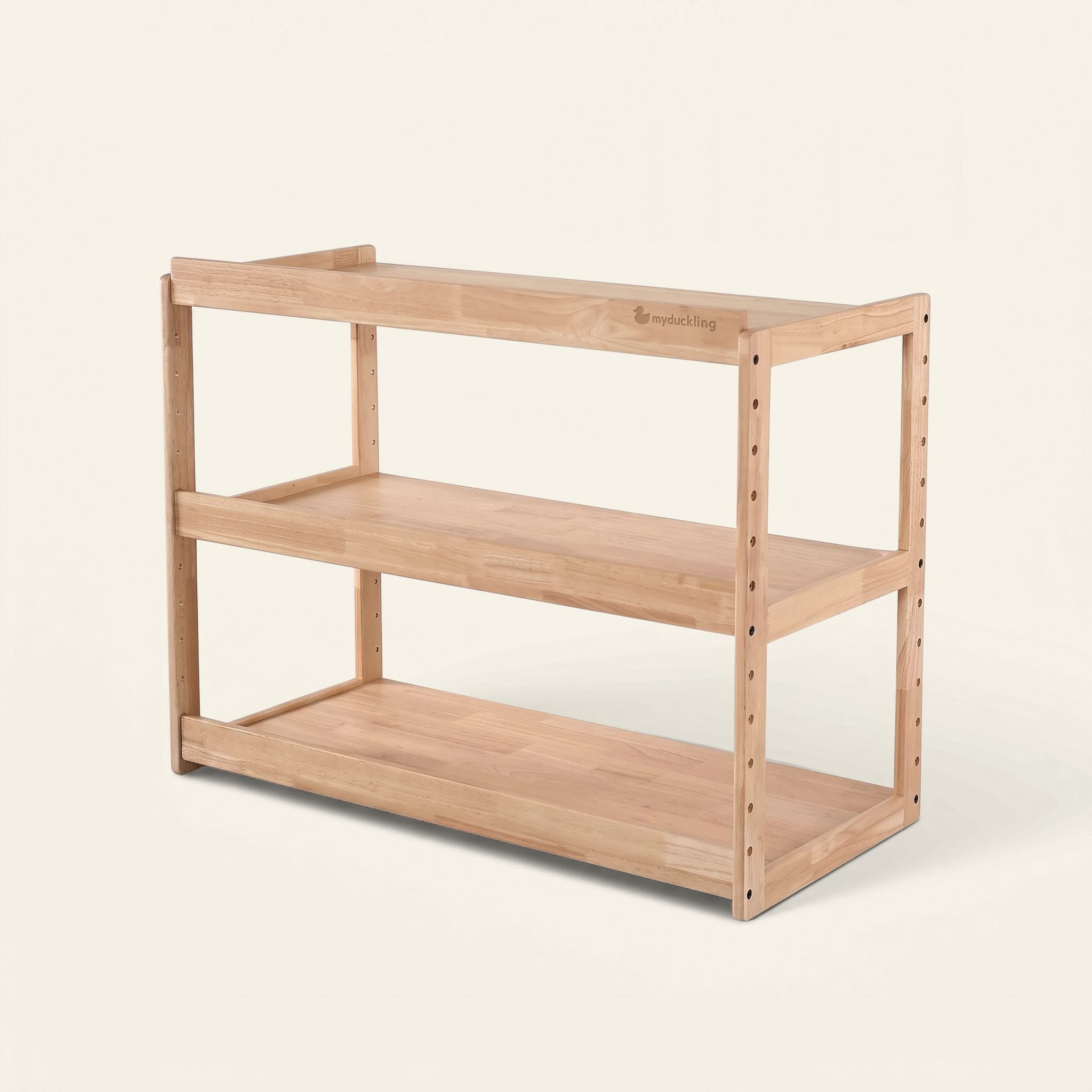
When children can see the covers, they pick up books more often. A face-out NALA Adjustable Bookshelf puts a rotating selection on show, so the shelf feels less like storage and more like an invitation to read.
A revolving bookcase that turns to the child
A BINDI Revolving Bookcase spins in place, so books and small treasures on every side come to your child rather than being buried at the back. Corners are rounded and the base is weighted to stay steady as it turns.
Built safe, and made to grow with the collection
Shelf positions adjust as your child moves from board books to chapter books. Every unit has rounded corners and a smooth, sanded finish, and stands firm on the floor as small hands pull books on and off.
Pairing your kids bookcase with the rest of the room
A bookcase works best alongside a tidy home for everything else. Browse the wider bedroom range to match shelving and storage that keep books and toys where a child can reach them.