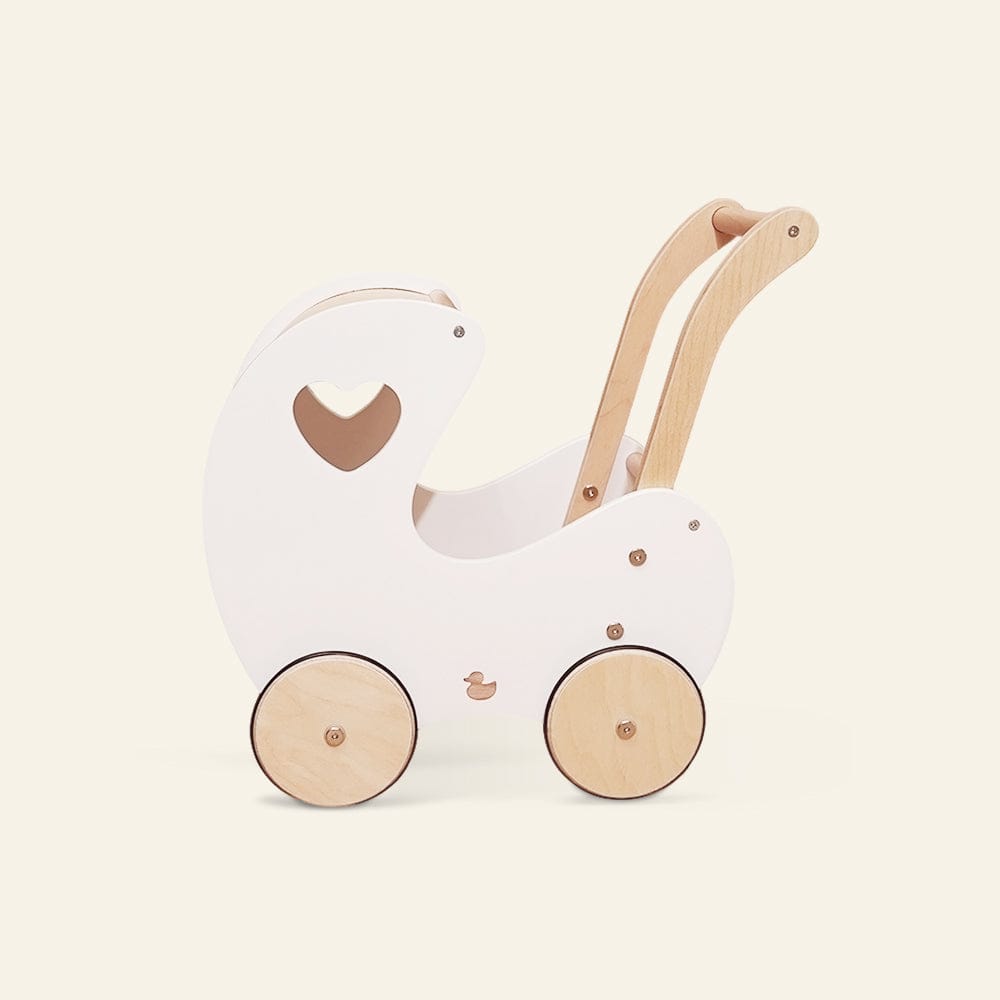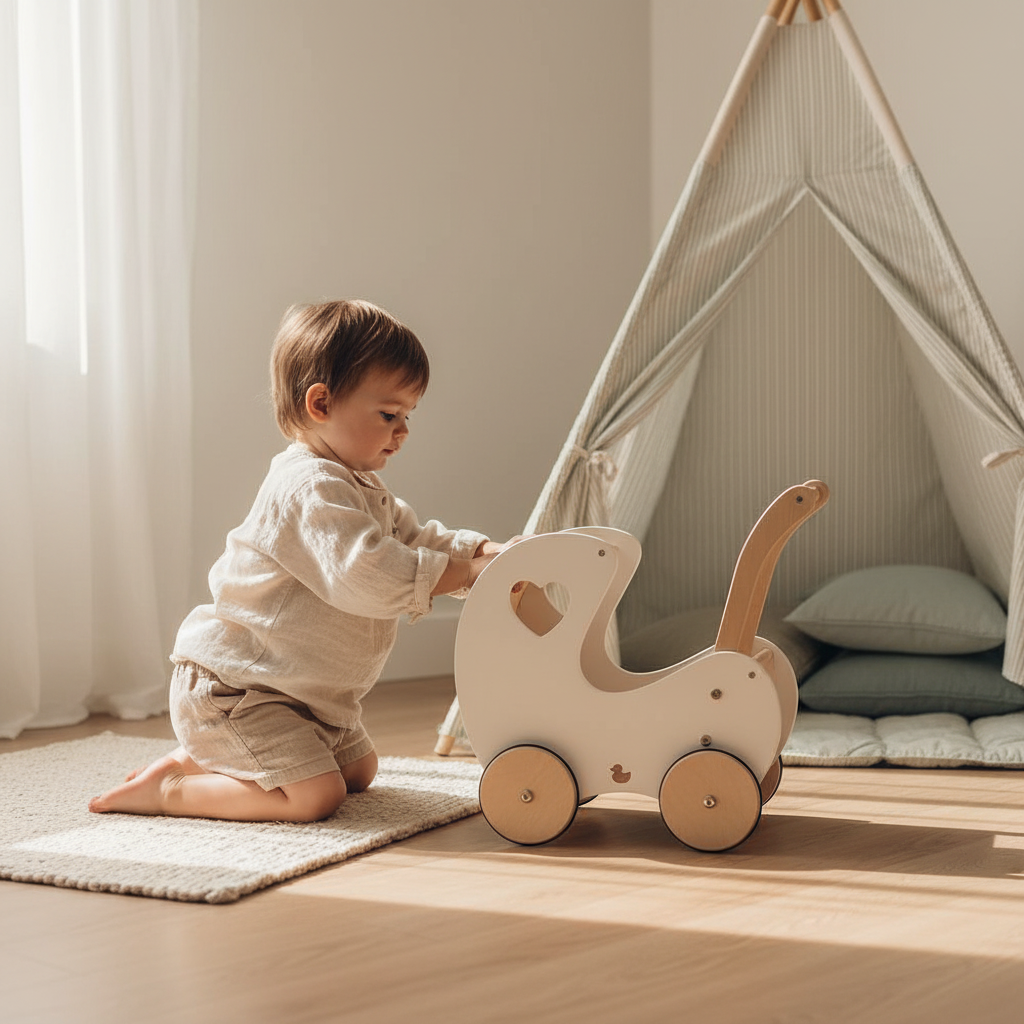
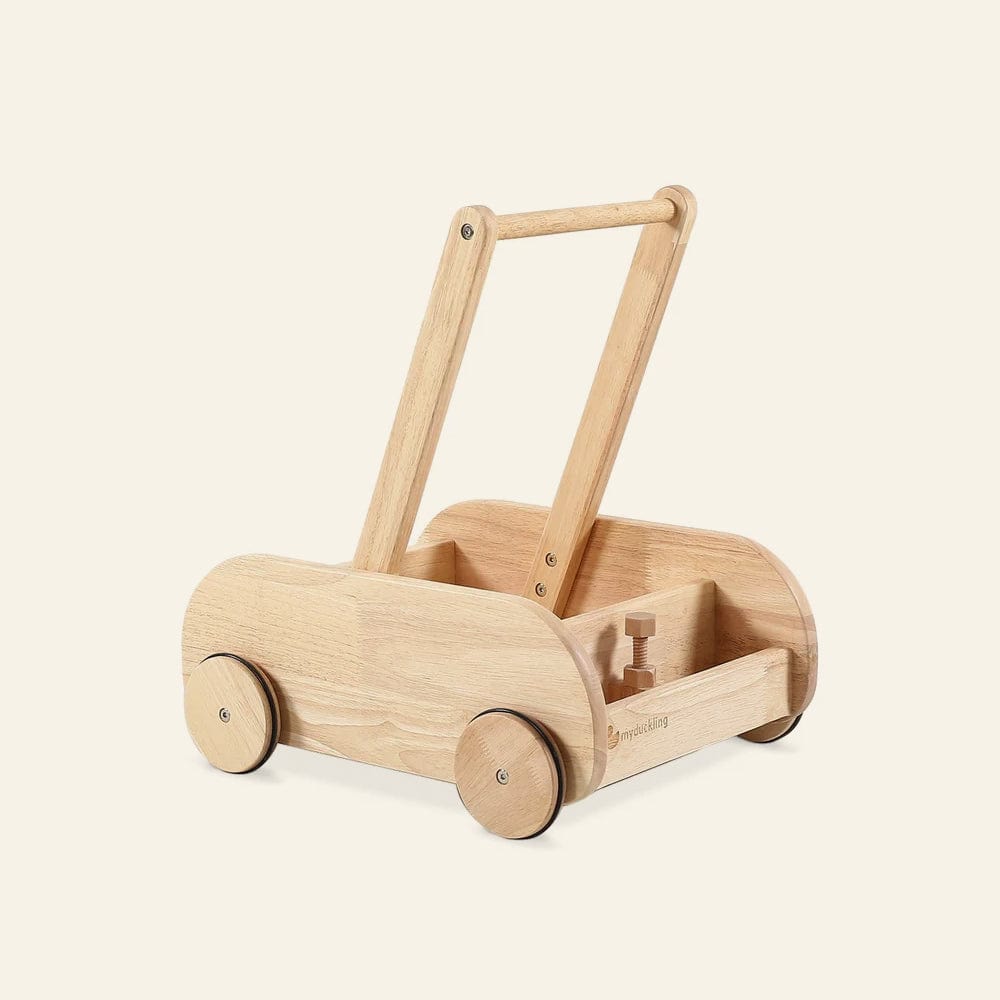
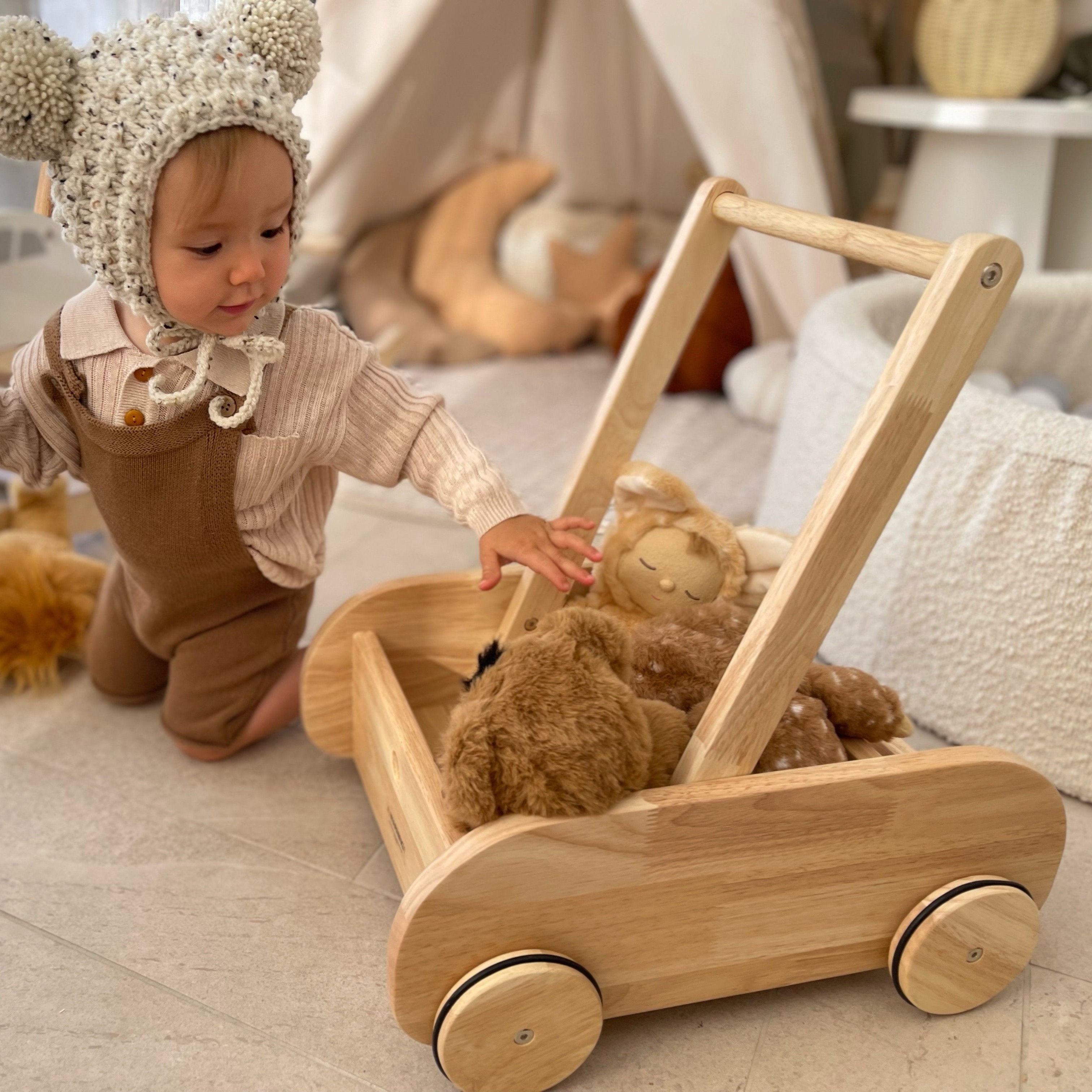
It's a stable little trolley your baby holds and pushes as they find their feet. Unlike a seated walker, it lets them move under their own steam, which is what builds the balance and leg strength behind real first steps. Most have a small cart to fill and empty, giving your baby a good reason to push it from room to room.
What age is a baby walker for?
It suits babies who are pulling up and cruising along the furniture, usually from around nine to twelve months, and stays handy through the early toddler months as walking gets steady. There's no rush, since it moves at your baby's own pace. It just gives them something solid to hold while they practise those wobbly, determined first steps.
Are wooden baby walkers safe?
A push walker is one of the safer ways to back early walking, because your baby stays upright and in control instead of propped in a seat. Look for a sturdy handle and a wide, stable base that won't tip as they lean in. Use it on flat floors well away from stairs and steps, and stay close while your baby's finding their balance.
How does a push walker help my baby learn to walk?
Holding and pushing the walker lets your baby carry their own weight while they practise standing and stepping. That's what builds the leg strength and coordination behind independent walking. The little cart adds to it. Loading it up, pushing it along and tipping it out keeps a newly mobile baby busy, and turns practice into play.
What should I look for in a baby walker?
Stability and control matter most. You want a sturdy handle set at the right height, and a wide base that won't tip when your baby leans on it. Smooth wheels help too, ones that roll steadily rather than shooting off. A cart to fill adds play value. A simple, well-built walker will take plenty of pushing and leaning through the first-steps stage.
Is a baby walker worth it?
It proves its worth in a short but important window, and the right one keeps going well past it. Once walking is steady, the cart lives on as a favourite for hauling toys around. A solid build also passes easily to the next baby. Between supporting first steps and then becoming a toy, you get years of use out of it.
What a wooden baby walker helps with
A wooden baby walker gives a baby who is pulling to stand something sturdy to push, steadying those first cruising steps. The weight and the wide, stable base help it move at a controlled pace rather than shooting away.
It supports the move from standing to walking, going at a speed your baby can manage rather than one that runs away from them.
A wooden baby walker that moves at your baby's pace
A RHEA Wooden Adjustable Baby Walker is built to resist tipping and can be set to roll more slowly while your baby finds their balance. Rounded corners and a smooth finish suit hands and knees on the floor.
A wooden baby walker made to stay steady
A weighted, wide base and solid wood construction keep the walker planted, so it supports rather than surprises a new walker. It is simple to wipe down and hard-wearing through daily use over many months.
More than a walker as your baby grows
The same steady build suits imaginative play too. An ISLA Doll Pram Walker carries a favourite doll along at walking pace, so the walker stays in use well after those first steps.
Choosing a walker for a new walker
Look for a stable base and a controlled roll for those first weeks on two feet. For more of what suits this stage, see our baby range of first furniture and early pieces.