

What Size Table and Chairs Does Your Child Need?
A child-sized table and chair set gets used every day if it fits, and gathers dust if it does not. The difference is height. A set that is too tall leaves a child with dangling feet and their chin near the top; too short and they are hunched over with their knees up. Get the height right and a child will sit and draw, build and eat happily for far longer. This is a sizing guide by age and height, with why an adjustable set is the safer buy and how to measure your child for a proper fit.
In This Article:
- Why the Right Height Matters
- Table and Chair Sizes by Age
- Why an Adjustable Set Beats a Fixed One
- Measuring Your Child for the Right Fit
- Setting Up a Table Your Child Can Use on Their Own
- Frequently Asked Questions
Why the Right Height Matters
When a child sits at a table that fits, three things line up: their feet rest flat on the floor, their knees bend at a comfortable right angle, and their elbows sit at about the height of the tabletop. From there they can lean in, hold a crayon steady and stay put, because their body is supported rather than fighting to balance.
Get it wrong and the table stops being used. A tabletop too high forces a child to reach up and work with their shoulders around their ears. A chair too high leaves their feet swinging with nothing to brace against, so they fidget and slide off. A set too low folds them up with their knees pushed against the underside of the table. None of it is comfortable, and a child votes with their feet.
This is why height, not looks, is the first thing to sort out. A well-sized set becomes the spot where a child chooses to sit and concentrate, which is the whole point of giving them their own table.
Table and Chair Sizes by Age
Age is a useful starting point, though children of the same age vary a lot in height, so treat these as a guide and measure your own child before you commit. As a rough map from toddler through to early school age:
- Around 2 to 3 years: a seat height near 20 cm and a tabletop near 40 cm suits most children at this stage, when they are just starting to sit and play at a table.
- Around 3 to 4 years: a seat height near 24 cm and a tabletop near 45 cm keeps a growing preschooler comfortable.
- Around 4 to 6 years: a seat height near 28 cm and a tabletop near 50 cm carries a child into the early school years.
The pattern to notice is that the table and chair rise together, keeping roughly a 20 cm gap between the seat and the tabletop so a child's legs fit under and their arms reach the top. A set that only comes in one fixed height sits right for a year or so and then either gets outgrown or was bought too big to start with.
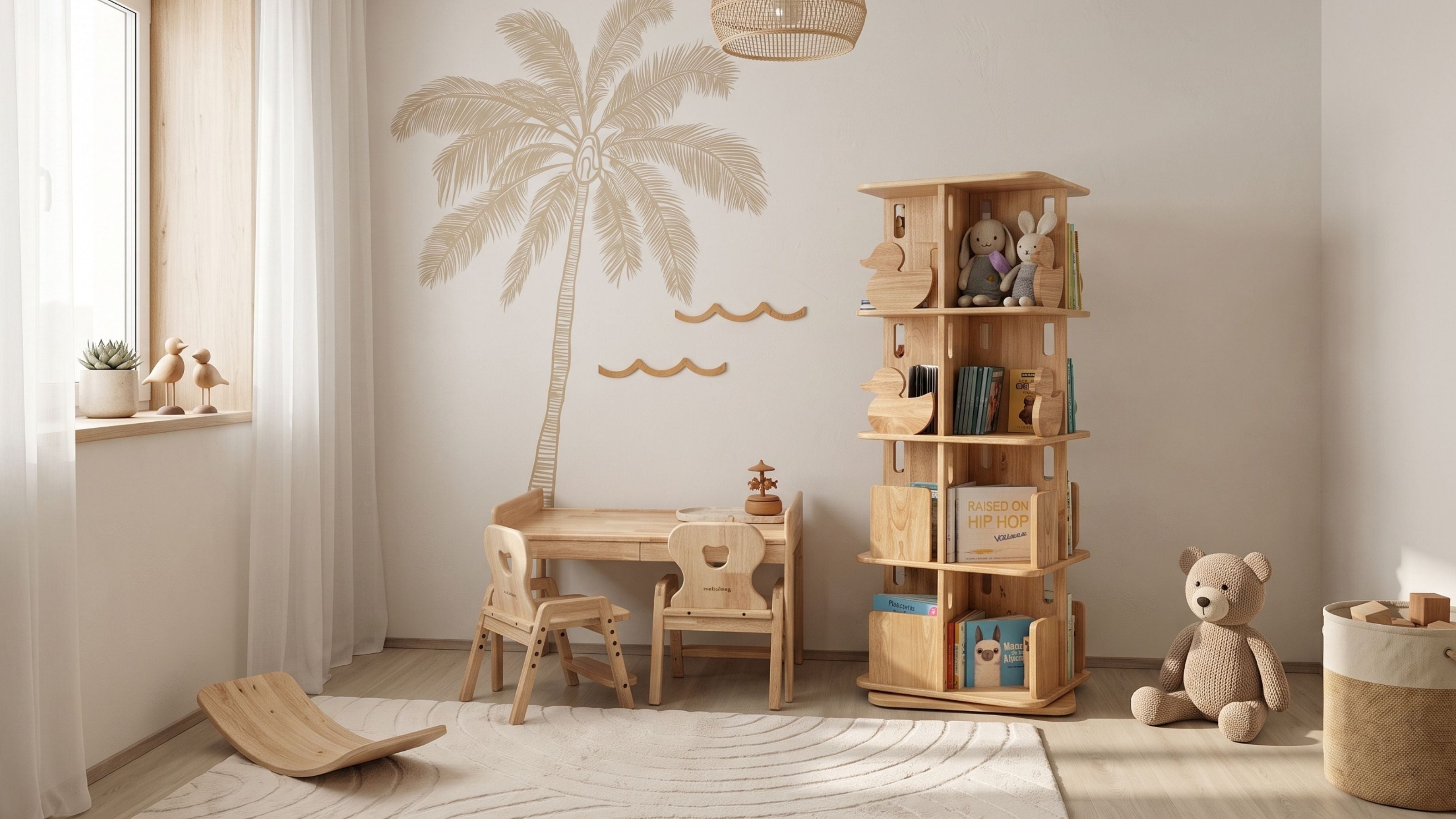
An adjustable set solves that. The KAYA Adjustable Table and Chair Set spans this whole range, with a table that sets to five heights from about 40 cm to 52 cm and a chair with four seat heights from about 19 cm to 29 cm, so one set covers roughly three to six years old rather than one age band.

Why an Adjustable Set Beats a Fixed One
A fixed-height table is a snapshot: it fits the child on the day you buy it and slowly stops fitting as they grow. Because children grow in bursts, a set bought to fit now can be too small within a year, and a set bought big 'to last' is uncomfortable for the first two.
An adjustable set moves with the child. You raise the seat and the tabletop a step at a time as they grow, keeping the fit right for years from the same piece of furniture. That makes the cost per year of use much lower than replacing a fixed set twice, and it saves the child the disruption of losing a table they have made their own.
Solid timber matters here too. A set that will be raised, leaned on, climbed on and drawn on for years needs to stay firm through all of it. The KAYA set is built from solid rubberwood for exactly that reason, with a small drawer under the tabletop for pencils and a raised lip around the edge that keeps beads and crayons from rolling onto the floor.
Measuring Your Child for the Right Fit
Two measurements beat any age chart. Sit your child on a firm chair with their feet flat on the floor and their knees bent at a right angle. Measure from the floor to the top of their knee: that is close to the seat height they want, so their feet reach the floor when seated. Then, with their upper arms resting by their sides and forearms out level, measure from the seat to the underside of the elbow and add that to the seat height for a comfortable tabletop.
As a quick check, when your child sits at the finished set their feet should be flat, their knees clear of the underside of the table, and their forearms able to rest on the top without lifting their shoulders. If any of those is off, adjust a step until it lines up.
With an adjustable set you make these small changes over the years rather than buying again, and it is worth checking the fit each time you notice a growth spurt, new shoes that no longer fit or trousers gone short are usually the sign it is time to raise a setting.

Setting Up a Table Your Child Can Use on Their Own
Beyond height, a child-sized table earns its keep by being one a child can reach and manage without help. Set it somewhere they can pull the chair out, climb on and off and get to their crayons and books themselves, and the table becomes a place they go to on their own rather than one they are lifted into.
A low, open shelf beside the table for paper, blocks and puzzles turns the corner into a small workspace a child can set up and pack away themselves, which builds the habit of tidying as part of the activity. Keep the surface clear of anything precious so a child feels free to draw, glue and build without worrying about the table itself.
If you are choosing between a table set for activities and a dining chair for meals at the family table, they answer different needs, and our guide to choosing kids table and chairs covers the selection side in more detail. You can compare the full range in the kids tables and chairs collection.
Frequently Asked Questions
What height should a table and chairs be for a toddler?
For a child around two to three years old, a seat height near 20 cm and a tabletop near 40 cm suits most. The aim is for their feet to rest flat, their knees to bend at a right angle, and their elbows to sit at about the height of the tabletop. Measuring your child beats going by age alone.
What age is a kids table and chair set for?
It depends on whether the set adjusts. A fixed set suits one age band, while an adjustable set like the KAYA table and chairs spans roughly three to six years by raising the seat and tabletop a step at a time as the child grows.
How do I measure my child for the right chair height?
Sit your child on a firm chair with their feet flat and knees bent at a right angle, then measure from the floor to the top of their knee. That is close to the seat height they need. For the table, add the height from the seat to their elbow when their forearm is level.
Is an adjustable table and chair set worth it?
For most families, yes. Children grow in bursts, so a fixed set is often outgrown within a year or bought too big to be comfortable at first. An adjustable set keeps the fit right for years from the same furniture, which lowers the cost per year and saves buying twice.
Looking for a set that grows with the fit? See the adjustable options in the kids tables and chairs collection and match the height to your child.





Leave a comment
This site is protected by hCaptcha and the hCaptcha Privacy Policy and Terms of Service apply.